
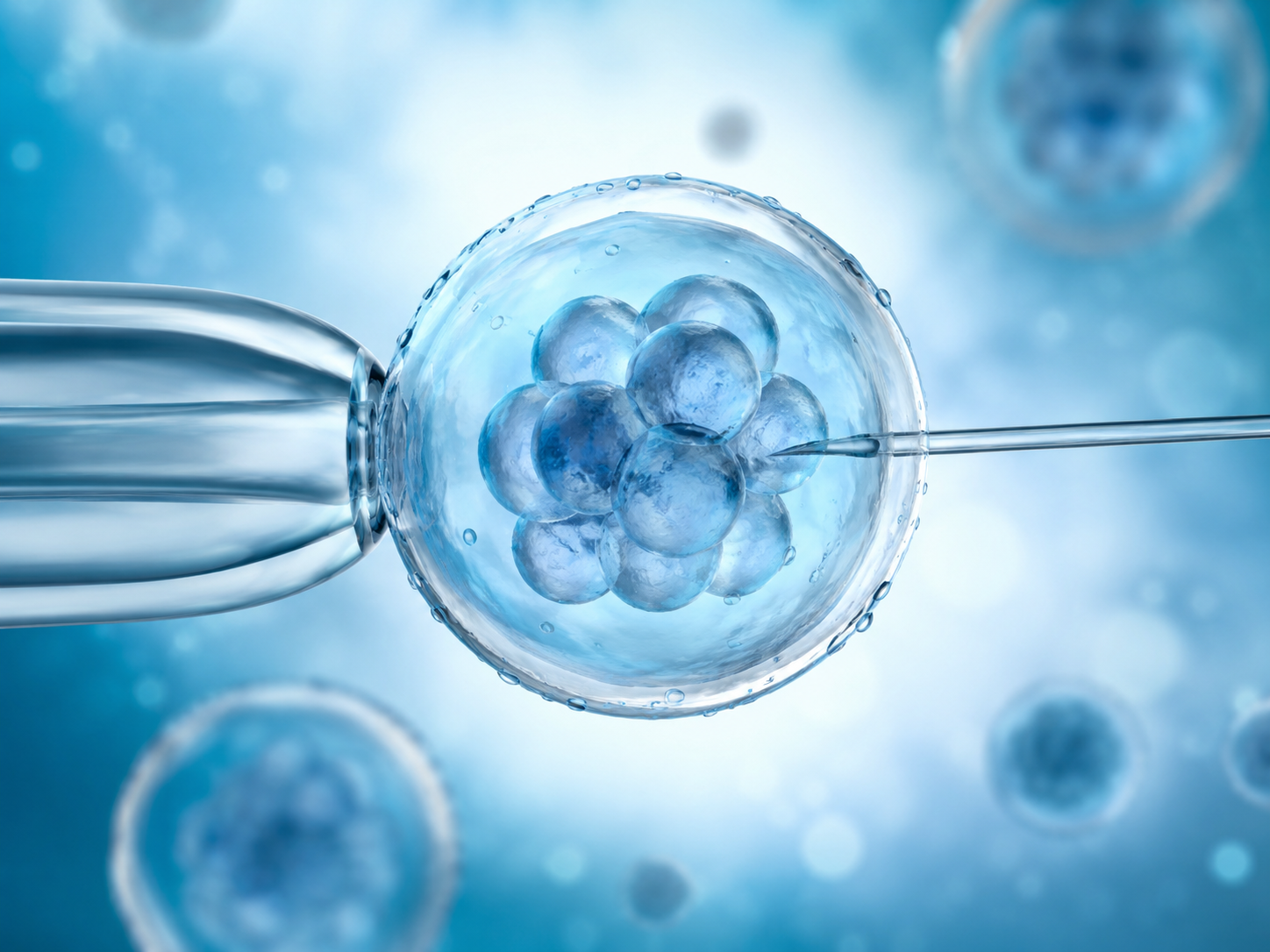
PGT testing (Preimplantation Genetic Testing) is a screening tool used in IVF to assess the health of embryos before they are transferred. It helps your care team identify embryos with the correct number of chromosomes or screen for specific inherited conditions.
Key Takeaways:
You might not have expected to be thinking about genetic testing at this point. It may have come up during a conversation with your doctor, or it could have found its way into your search history late one night after reading about IVF.
Either way, it brings up a lot of questions. Do you need it? Will it improve your chances? And what does it mean for the future you’re trying to build?
Preimplantation genetic testing (PGT) can provide valuable information before an embryo transfer. However, it’s not one-size-fits-all. It’s not about finding a perfect embryo, but about giving you and your care team more insight to make informed decisions.
At King Square Fertility, in-house coordination for genetic testing during IVF helps make the process more seamless. This means fewer gaps, clearer communication, and more support as you move forward.
In this guide, we’ll walk you through what PGT testing involves and how to decide if it’s right for you.
PGT testing is a procedure performed on embryos created through in vitro fertilization (IVF) before they are transferred to the uterus.
Your care team carefully removes a few cells from the outer layer of the embryo that eventually becomes the placenta. This process, known as embryo biopsy, usually occurs around days five or six of development.
While the cells are analyzed in a specialized lab, the embryos are safely frozen. Once the results arrive, you’ll sit down with your specialist to review the findings and decide on the best path forward.
According to the Mayo Clinic, this process allows for the selection of embryos with the highest potential for a successful pregnancy. There are three main types of fertility genetic testing you might encounter:
PGT-A, short for preimplantation genetic testing for aneuploidy, looks at whether an embryo has the right number of chromosomes.
Most people have 46 chromosomes, with 23 coming from each parent. When an embryo has more or fewer chromosomes than expected, it’s called aneuploid.
In many cases, embryos with these differences don’t lead to a pregnancy. Sometimes they may implant but end in an early miscarriage. In a smaller number of cases, certain chromosomal conditions, such as Down syndrome, can still result in a live birth.
PGT-A is the most common form of genetic screening in IVF. It’s often discussed for individuals over 35, those who have experienced recurrent pregnancy loss, or those who have had multiple unsuccessful embryo transfers.
PGT-M, or preimplantation genetic testing for monogenic disorders, is used when you or your partner carries a known genetic condition that could be passed on to a child.
This can include conditions like cystic fibrosis, sickle cell disease, Huntington’s disease, or certain inherited cancer risks such as BRCA mutations.
What makes PGT-M different is that it’s tailored specifically to you. Before your IVF cycle begins, the lab develops a custom test based on your family’s genetic profile.
Rather than screening broadly, it focuses on one specific condition, giving you more precise information as you plan your next steps.
PGT-SR is used when one partner has a known structural rearrangement in their chromosomes, such as a translocation or inversion. These rearrangements can lead to embryos with missing or extra genetic material, which often results in implantation failure or miscarriage.
If you or your partner has been diagnosed with a chromosomal rearrangement through previous testing, your fertility specialist may recommend PGT-SR.
Here’s where the conversation often gets complicated: PGT provides information, but that information has boundaries.
For example, a chromosomally normal embryo, often called euploid, is more likely to implant and lead to a healthy pregnancy.
However, “more likely” doesn’t mean guaranteed. Even with a euploid embryo, pregnancy is not certain, and sometimes implantation doesn’t happen for reasons unrelated to genetics.
On the other hand, some embryos labelled as abnormal may still have potential. This is especially true for mosaic embryos, which contain a mix of normal and abnormal cells.
The science around this is still evolving, and different clinics may handle these embryos differently depending on the situation.
It’s also helpful to know that PGT doesn’t test for everything. It can’t screen for conditions such as autism, most developmental differences, or many birth defects. It also can’t predict your child’s future health, traits, or personality.
There is also the step of embryo biopsy to consider. While current techniques are considered safe and most embryos handle the process well, it is still a delicate procedure, and there is a small risk involved.
None of this detracts from the value of PGT. Instead, it highlights that its role is to provide guidance, not certainty.
What matters most is how that information fits into your unique situation, your history, and what you hope to learn as you move forward.
There’s no universal rule for who should pursue embryo genetic testing. However, it’s often a helpful part of the conversation in certain situations:
Yes. Many people complete IVF without PGT and have healthy pregnancies. The decision depends on your individual risk factors, your comfort level with uncertainty, and your goals. Your fertility specialist can help you weigh the pros and cons based on your situation.
While modern techniques are very delicate and performed by expert embryologists, any invasive procedure carries a minor risk.
Most embryos tolerate the biopsy well, but your specialist will discuss the specific safety statistics of their lab with you.
While the Ontario Fertility Program covers the cost of one IVF cycle for eligible residents with a valid OHIP card, the additional laboratory fees for PGT are generally not covered.
It’s best to check with your private insurance provider or the clinic’s financial coordinator for a clear breakdown.
While PGT-A does identify the sex chromosomes, the use of this information for sex selection is regulated. In Canada, the Assisted Human Reproduction Act prohibits selecting the sex of an embryo for non-medical reasons.
At King Square Fertility, we believe you deserve to understand your options fully before making any decision about your care. That includes genetic screening and testing.
Our approach is built on clear, compassionate guidance. We don’t recommend PGT to every patient. We recommend it when it makes sense, based on your history, your goals, and the realities of your cycle. And when we do recommend it, we walk you through what to expect, what the results might show, and what choices you’ll have afterward.
Our clinical team is here to answer your questions, connect you with genetic counselling when appropriate, and support you through the decision-making process. Whether you choose to pursue testing or not, you’ll never feel judged or pressured.
If you’re preparing for IVF or reviewing your embryo testing options, we encourage you to speak with your family doctor about getting a referral. From there, book an appointment and let’s talk through what makes sense for you.